Offshore Fuel Tank Blasting & Protective Coatings
Production-minded blasting and coating support for large offshore fuel-tank assets, from scope definition through inspection-ready delivery.
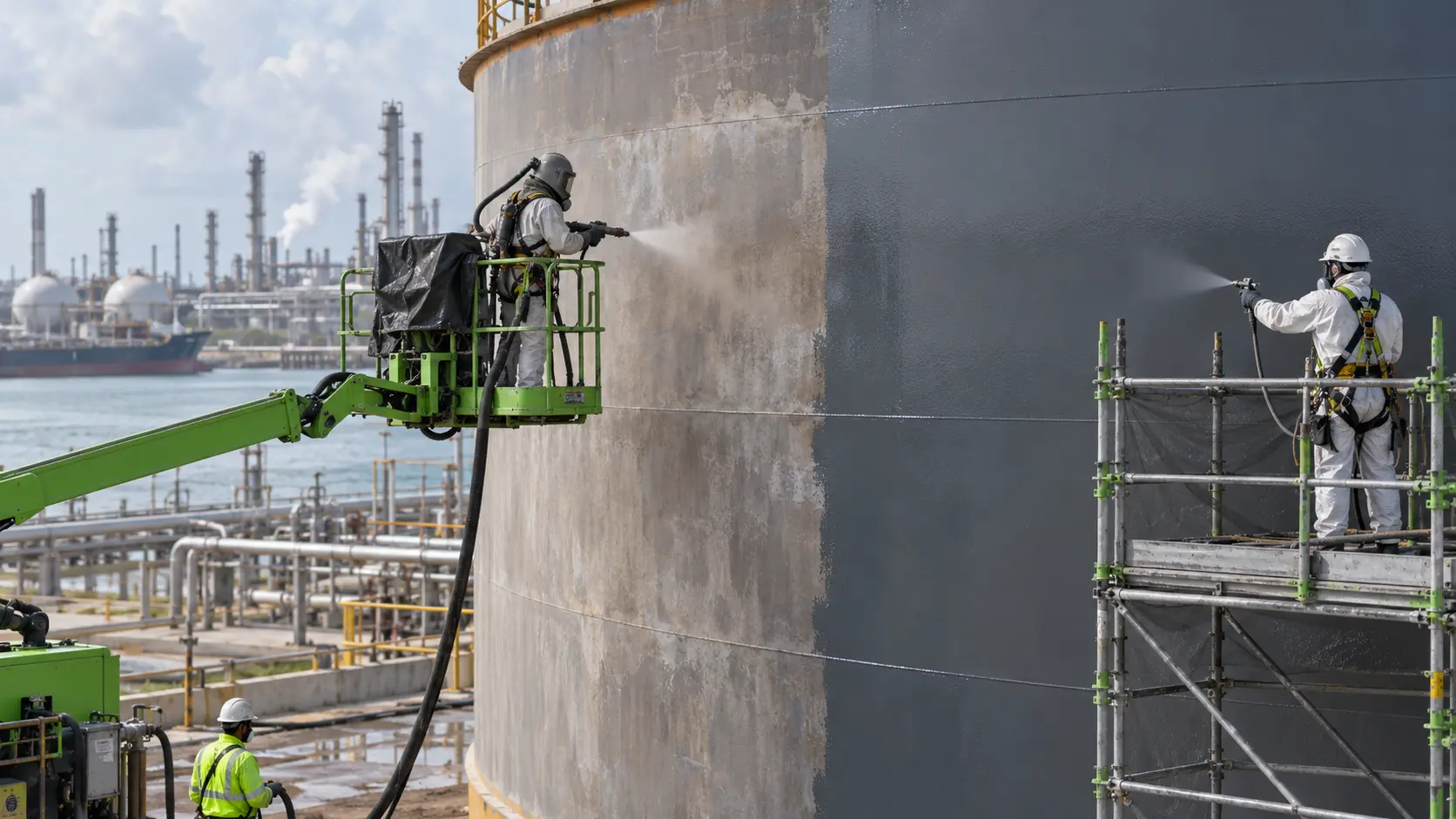
Whether it is a single-tank or multi-tank scope, a coordinated plan is needed.
Whether a marine operator has one tank or multiple large fuel tanks to protect, the work is more than surface preparation. It requires controlled access, containment, abrasive supply, coating-system discipline, inspection records and offshore logistics working together.
Surface preparation
Plan abrasive selection, containment, access and cleanliness targets around the substrate and exposure conditions.
Protective coating execution
Coordinate stripe coating, full coats, recoat windows and application conditions against the approved specification.
Inspection & documentation
Build hold points, readings, batch traceability, punch-list control and closeout records into the production sequence.
Built for offshore coordination.
For a planned scope involving one or more offshore fuel tanks, the safest path is to align the work package before mobilization.
- Tank-by-tank production sequencing and access planning
- Containment, ventilation and abrasive-recovery requirements
- Surface-profile, cleanliness and environmental controls
- Coating-system compatibility, cure windows and recoat timing
- Inspection checkpoints, reporting and turnover documentation
- Material staging, delivery timing and offshore coordination
Let’s scope the tank program.
Bring the tank count, access constraints, coating specification and schedule. We will help turn the conversation into a clear, executable work package.
Offshore fuel tank coating FAQs
Can you support both single- and multi-tank offshore programs?
Yes. Single- and multi-tank scopes should be planned with clear sequencing, inspection points and material logistics for each tank.
Do you provide abrasive media as well as coating support?
We can coordinate abrasive-media requirements with the blasting and coating work so the specification, delivery timing and field execution stay aligned.
What should be ready before a kickoff call?
Helpful inputs include tank count, approximate dimensions, access conditions, existing coating condition, target coating system, schedule and inspection requirements.